

Introduction
What does it really mean to learn a language? Is it vocabulary, grammar, or something deeper—the mindset and way of life embedded within the words?
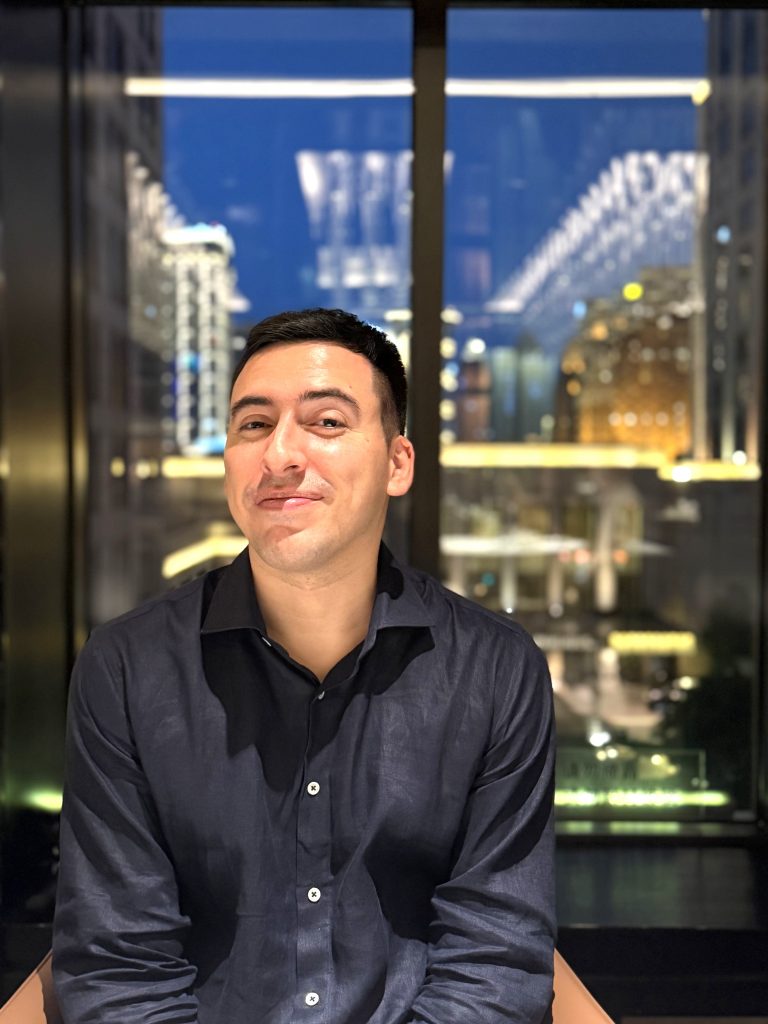
For Diego, the answer was clear from the very beginning. Originally from Chile, he arrived in Shanghai only a year ago. When he walked into Mandarin Inn, his Chinese began at HSK1.
“Learning the language is also learning how its people think.” he says. That may be the most honest starting point for a newcomer—not for exams, not for a CV, but simply to truly live here.
Why China?
Diego is from Chile, working as an R&D project manager. He came to China after receiving an offer to continue his work in the lithium industry—based in Shanghai.

“I received an offer to continue my work in the lithium industry, but from Shanghai,” he explains.
In his first year in Shanghai, he did something many newcomers hesitate to do: he started taking Chinese classes at Mandarin Inn in January, beginning at HSK1.
Is It Useful to Learn Chinese?
When asked whether learning Mandarin is useful for foreigners, Diego is firm.
“I truly believe it’s essential to learn Mandarin to really experience what it’s like to live in China. Learning the language is also learning how their people think.” he says.
There’s no flourish in that statement, yet it captures the essence of language learning: it’s not just a tool, but a door.

Learning Hacks
Diego’s attendance is remarkably consistent. He has a simple but firm reason.
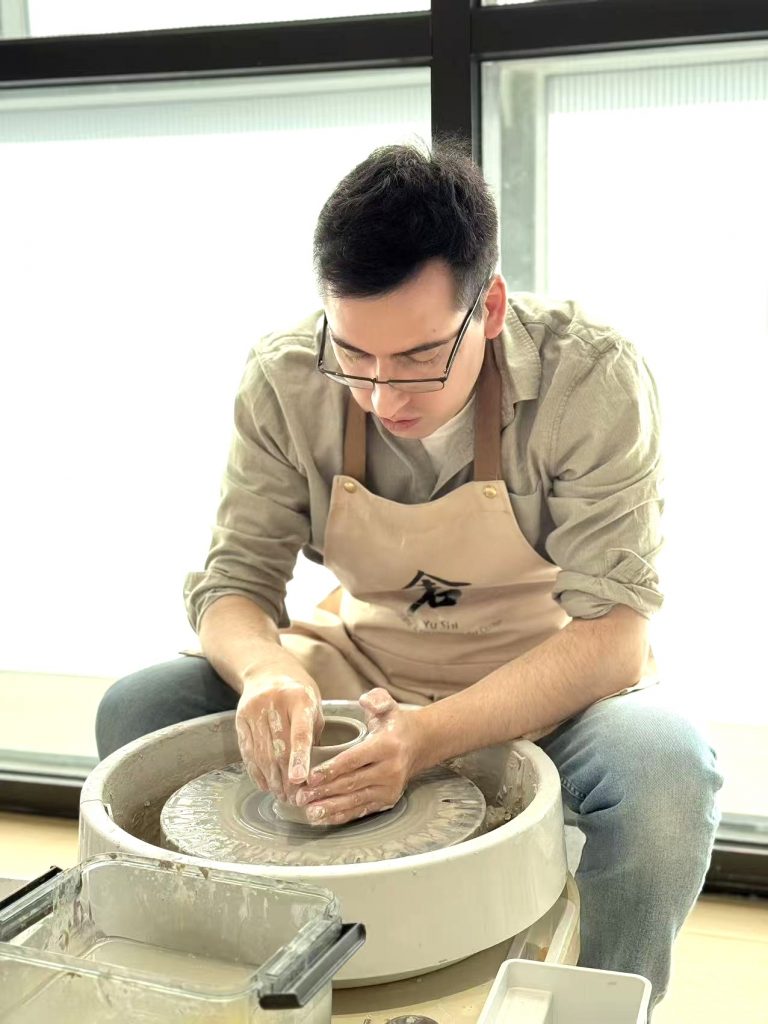
“To acquire any skill, being constant is key. So I cannot allow myself to miss classes unless I have a very good reason.”
His learning methods are equally grounded in daily life.
“I surround myself with Chinese content—watching Chinese social media videos, watching sports on Chinese TV. I also try to practice with my colleagues every week.”
When he’s out and about, he has a small habit: reading every Chinese phrase he sees, checking if he recognizes it, if he understands it.
“That way I can practice my memory for the many characters that exist,” he says.
On online resources, Diego takes a refreshingly “counter-trend” stance.
“I used the online resources in the first month, but then I felt the material from my teacher was enough to practice during the week. I also prefer books to avoid too much screen time, which is already high because of my work.”

About the Teacher
At Mandarin Inn, Diego found a teacher who feels just right.
“She is a very good teacher. She pushes me to improve always and gives me very practical, useful tips for everyday activities.”
In his view, a great teacher isn’t necessarily one who crams in the most content. It’s one who helps you feel that every lesson has a place in your daily life.
“The most important thing is to have a teacher to help you on the journey,” he says.
Learning in China
After a year of learning, Diego has had his share of “cultural moments.”
“I find it interesting how some words, in Chinese and also in my native language, are very difficult to explain—even for native speakers. Many times we just use them without thinking that much.”
It’s a feeling every language learner knows: some expressions can’t be translated, only felt.
“I think this is common for every language. That’s why it’s so important to have a teacher to help you along the way.”
Workshops
Outside of work, Diego’s biggest passion is basketball—a hobby that, unexpectedly, became a key to fitting into Shanghai life.
“I really like basketball, and it’s great that it’s also very popular in China. Like any sport, it has a ‘universal’ language connected to the culture, which helps me connect with Chinese people even when we don’t share a native language.”
This year, he even became a fan of Shanghai’s basketball team.
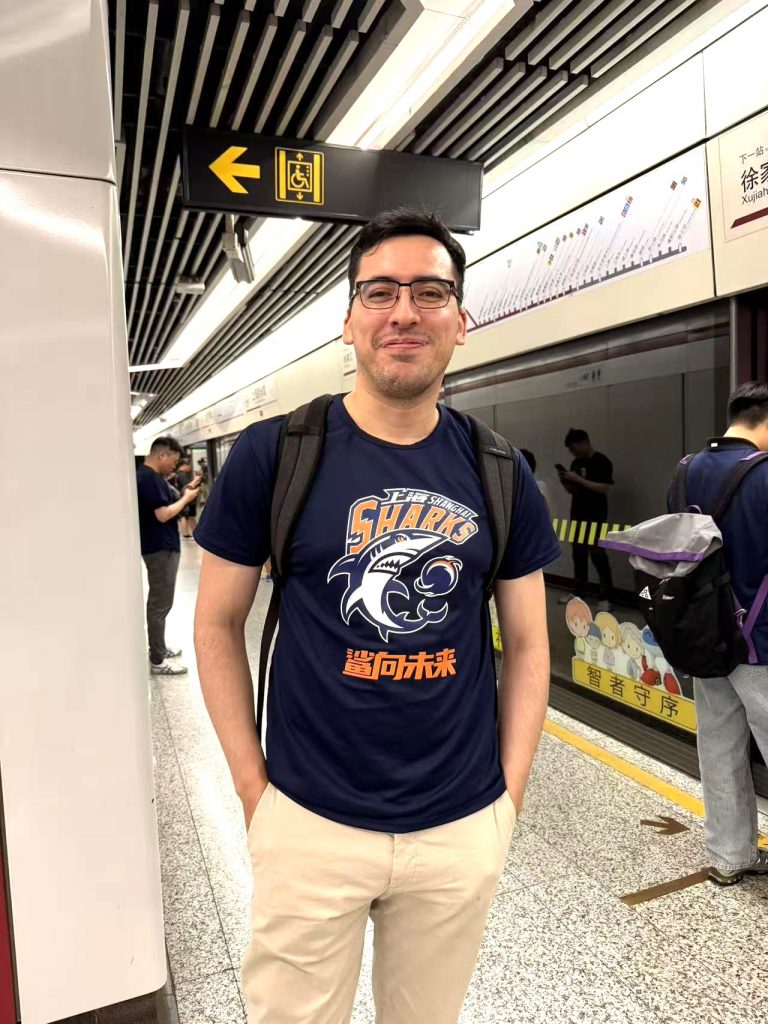
“I even became a fan of Shanghai’s basketball team this year,” he says, with an ease that feels like home.
Favourite Chinese Sentence
At the end, I asked Diego for his favorite Chinese phrase.
He said: “Long time no see.“
“I like its friendly way to say hello to someone you haven’t seen in a while.”
Those four characters may be the perfect metaphor for his year in Shanghai: encountering a new language and a new life—from unfamiliarity to familiarity, and eventually, to looking forward to meeting again.
Closing
Inside the century-old villa of Mandarin Inn, every learner has their own rhythm and their own story.
Diego’s story isn’t complicated: a young man from Chile, working in Shanghai, starting Chinese from HSK1—not through quick fixes or bursts of motivation, but through showing up to every class and pausing, whenever out in the world, to read.
Perhaps the most moving part of language learning is exactly this: it brings a person, day by day, closer to another kind of life. (End)
Looking for the latest courses at Mandarin Inn?
Whether you prefer one-on-one tutoring or the dynamic of group classes, there’s a pace that fits you.
👉 Click here to explore our latest course offerings.
Join Mandarin Inn Chinese Courses and Cultural Workshops. From structured learning to real-life practice, we help you make Mandarin part of your everyday life.
Free trial is also available, click the link below to register!

Mandarin Inn, More Than Just a Language School
Located in the scenic heart of Shanghai’s former French Concession, Mandarin Inn is housed in a historic villa, offering not only an ideal place for studying Mandarin but also a chance to experience Shanghai’s rich history and culture. As the home of the APM Public Library and recognized by Ecovadis for corporate social responsibility, Mandarin Inn carries a dual mission of education and cultural heritage.